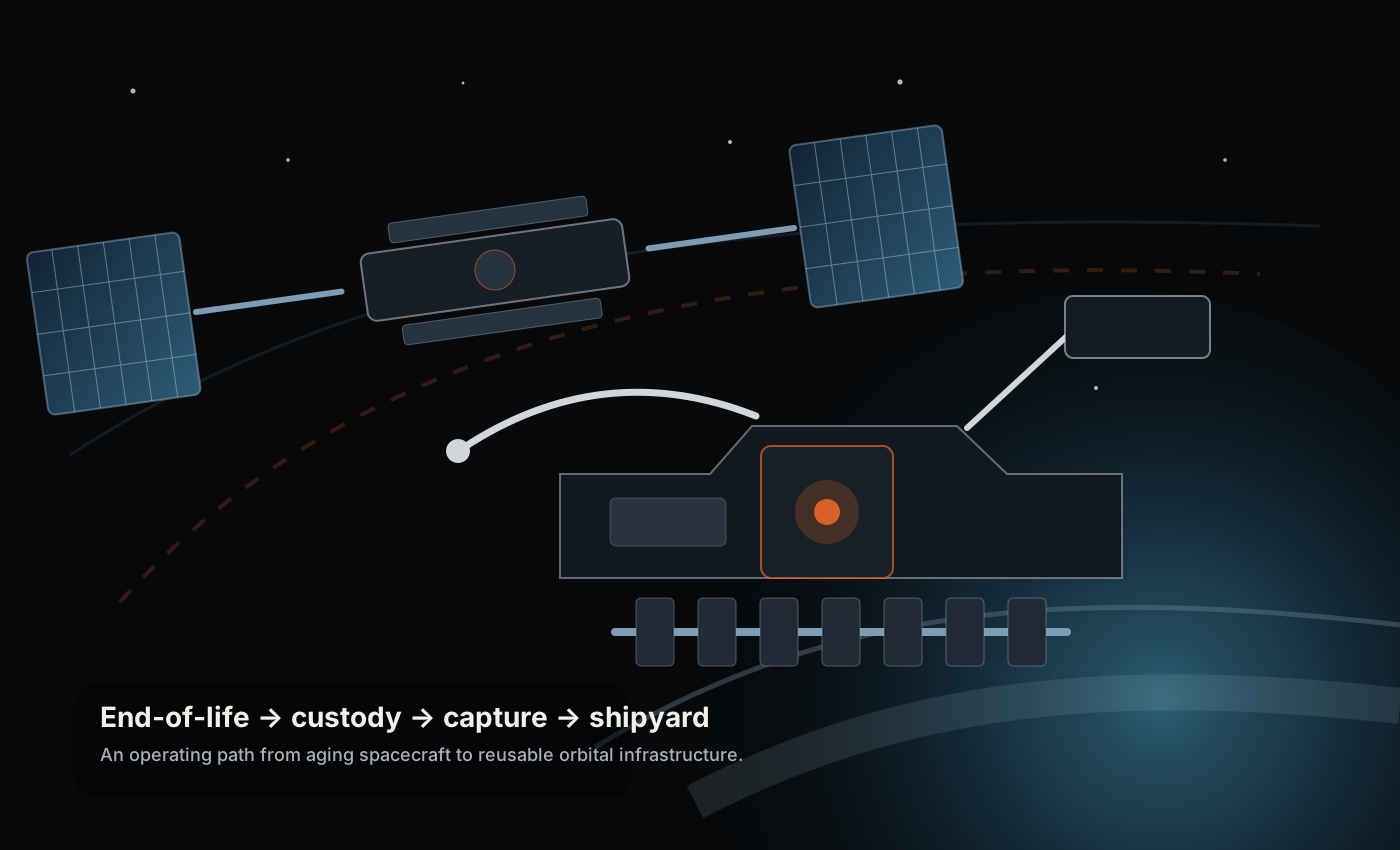
Satellite end-of-life is broken.
Operators spend years designing spacecraft, then their best engineers get trapped monitoring aging satellites, planning disposal, and babysitting assets that no longer justify internal attention.
Engineering drag
Aging satellites consume attention from the people who should be designing the next mission.
Wasted orbital material
Compute, radios, propulsion, aluminum, solar panels, batteries, sensors, and structure are destroyed.
No custody pathway
There is no standard commercial handoff from “operator is done” to “builder can reuse this.”
We take over end-of-life spacecraft.
Tycho starts where the original mission team wants to stop. We monitor, operate, transition, dispose of, or when possible capture retired spacecraft.
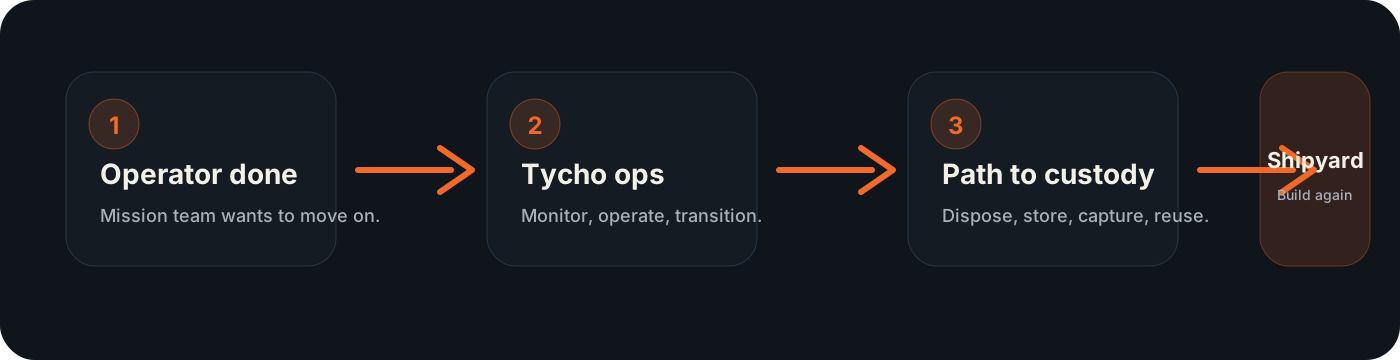
End-of-life mission ops
We monitor and operate aging spacecraft after the original team is ready to move on.
Custody transition
We define what happens next: disposal, passivation, sale, capture, storage, or reuse.
Capture + storage
We develop the path from retired spacecraft to orbital inventory.
Shipyard reuse
Long term, retired spacecraft become feedstock for new orbital infrastructure.
Now accepting end-of-life spacecraft reviews.
Tycho will review aging spacecraft and produce a transition plan covering operational burden, disposal obligations, capture potential, custody options, and lower-cost end-of-life operations.
Starting model
Transition plan for operators evaluating an aging spacecraft.
Monitoring, operations, anomaly response, disposal planning, and transition support.
Mission design, custody transition, and recovery planning per asset.
That worked when orbit was small. It breaks when orbit becomes infrastructure.
The industry is moving from one-off spacecraft to constellations, orbital compute, in-space manufacturing, and permanent infrastructure. That makes the current disposal model increasingly irrational. Tycho starts with operations because custody begins before capture.
The shipyard starts with custody.
Customer before disposal
Tycho meets operators before deorbit becomes the default answer.
Operational context
Mission operations reveal what is actually recoverable and what is not.
Rights pathway
Custody, transfer, storage, and reuse need a business process before hardware capture scales.
Satellite mission experience plus trusted mechanical execution.
Stephen Shaffer
Delivered a satellite for Los Alamos in 8 months as the only U.S. engineer at NanoAvionics. Worked across mission pricing, operations, business development, and customer conversations with U.S. space startups.
Alex
Mechanical design, CAD, fabrication, and mechanism-building. Cofounded North Street Labs with Stephen, selling engineering work door to door and building the hardware themselves. BattleBots experience with fast iteration, tight packaging, and failure under real loads.